Buying Guide: Solar Panels for Weekend Power Stations
Updated 2026-10-21 · Published by Charland & Co. · Based on published specs; we have not tested the products discussed.
Quick answer: For a weekend cabin or RV with a daily load of 1,050 Wh, a 1,050 Wh × 1.2 = 1,260 Wh needed. A 300 W panel in a location with 4.8 peak sun hours (like Phoenix, AZ) produces 300 × 4.8 × 0.75 = 1,080 Wh per day. This covers most of your needs when paired with a power station that accepts 12 V or 20 V input.
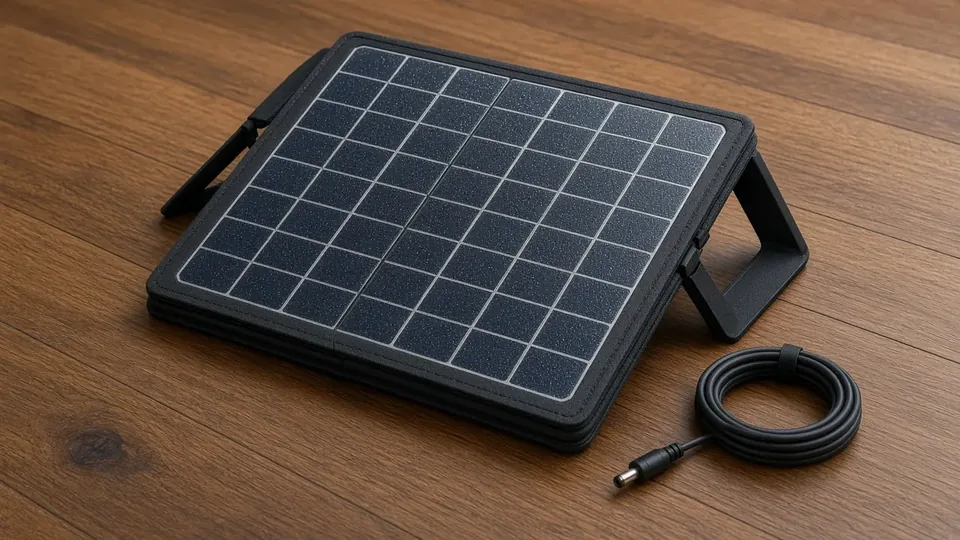
Solar panels are the backbone of any off-grid or hybrid power system for weekend use. When paired with a portable power station, they can provide clean, renewable energy for your cabin, RV, or camping trip. The key is to size your solar array correctly so that it can replace most of your calculated daily load. This guide will walk you through the key factors to consider when buying solar panels for your weekend power station.
Step-by-Step How to Size Solar Panels for Your Weekend Power Station
-
Calculate Your Daily Load
Start by listing all the devices you plan to power and their wattage. Multiply each device's wattage by the number of hours you expect to use it daily. Add up all the watt-hours (Wh) to get your total daily load. -
Determine Your Peak Sun Hours
Peak sun hours vary by location and season. Use this map to find the average peak sun hours for your area. -
Account for Efficiency Losses
Solar panels do not operate at 100% efficiency due to factors like dust, angle of incidence, and panel degradation. Multiply your daily load by 1.2 to account for inefficiencies and ensure you have enough power to cover your needs. -
Use the Solar Formula
Apply the formula:
Solar Wh per day = Panel W × Peak Sun Hours × 0.75
Rearranged to solve for the required panel wattage:
Panel W = (Daily Load Wh × 1.2) / (Peak Sun Hours × 0.75) -
Choose the Right Panel Type
Based on your needs for portability, durability, and efficiency, select between folding or rigid panels. -
Check Voltage and Connector Compatibility
Ensure your solar panels match the input voltage and connector type of your power station. -
Review Durability and Warranty
Look for panels with high IP ratings, tempered glass, and strong warranties that cover performance and defects. -
Compare Price Per Watt
Higher efficiency panels may cost more per watt but can provide more power in less space. Always compare the price per watt rather than the total price alone. -
Finalize Your Purchase
Once you've considered all the factors, finalize your purchase and ensure you have the right accessories for installation and use.
Wattage Targets from the Solar Formula
To determine how many watts of solar power you need, use the formula:
Solar Wh per day = Panel W × Peak Sun Hours × 0.75
The 0.75 factor accounts for real-world efficiency losses such as dust, angle of incidence, and panel degradation. You can find peak sun hours for your location using this map.
For example, if you live in a location with 5 peak sun hours and want to cover a daily load of 800 Wh, you would need:
Panel W = (Daily Load Wh / (Peak Sun Hours × 0.75))
Panel W = (800 / (5 × 0.75)) = 213 W
So, a 200-300 W panel would be sufficient. If you're in an area with fewer peak sun hours, you may need a larger panel or multiple panels.
Folding Versus Rigid Buying Criteria
When choosing between folding and rigid solar panels, consider your needs for portability and setup speed.
- Folding panels are lightweight, compact, and easy to transport. They are ideal for campers, hikers, and RVers who need to move their panels frequently. However, they tend to be more expensive per watt and may have slightly lower efficiency due to the folding design.
- Rigid panels are more durable and efficient, with higher wattage per square foot. They are better suited for permanent installations or locations where the panels won't be moved often. However, they are heavier and harder to transport.
If you're looking for a balance between portability and efficiency, a 200-400 W folding or rigid array is a good starting point for most weekend power needs.
Voltage and Connector Compatibility
Most portable power stations accept input voltages of 12 V, 20 V, or 24 V. Ensure that your solar panels are compatible with the voltage of your power station. Mismatched voltages can lead to inefficient charging or even damage to your equipment.
Also, check the type of connectors your power station uses. Common connector types include:
- MC4 connectors (used in rigid panels)
- USB-C, Anderson, or proprietary connectors (used in folding panels)
Always verify that your solar panels have the correct connectors for your power station. If you're unsure, look for a panel with a universal input or a power station that accepts multiple connector types.
Durability and Warranty Notes
Solar panels are exposed to the elements, so durability is a key consideration. Look for panels with:
- High IP ratings (e.g., IP67 or IP68) for water and dust resistance
- Tempered glass for impact resistance
- Aluminum frames for structural integrity
Warranty is also important. A good warranty typically covers:
- Performance guarantees (e.g., 25 years of 80% efficiency)
- Defects and manufacturing issues
- Weather-related damage (if applicable)
Always check the warranty terms before purchasing.
Portability and Setup Speed
If you're using your solar panels for camping or RV trips, portability and setup speed are crucial. Look for panels that:
- Fold or roll up easily
- Have lightweight materials (e.g., aluminum frames, thin glass)
- Come with mounting brackets or straps for easy installation on your roof or tent
Some panels come with built-in USB or DC ports for direct charging, which can be a time-saver when you're on the go.
Price Per Watt Ranges
Solar panels vary in price depending on their type, efficiency, and brand. Here are typical price ranges per watt:
- Folding panels: usually cost more per watt than rigid panels.
- Rigid panels: usually the lowest cost per watt. Divide the current price by the panel watts to compare.
Keep in mind that higher efficiency panels may cost more but can provide more power in less space. Always compare the price per watt rather than the total price alone.
Final Checklist Before Purchase
Before buying solar panels for your weekend power station, make sure to:
- Calculate your daily load using this guide.
- Determine your peak sun hours using this map.
- Choose the right wattage based on the solar formula.
- Select between folding or rigid panels based on your needs.
- Check voltage and connector compatibility with your power station.
- Review durability and warranty terms.
- Consider portability and setup speed.
- Compare price per watt across different models.
Worked Example: Sizing Solar for a Weekend Cabin
Example 1: 800 Wh Daily Load
- Daily Load: 800 Wh
- Peak Sun Hours: 5
- Efficiency Factor: 0.75
- Sizing Factor: 1.2
Step 1: Adjust for Efficiency and Inefficiencies
Adjusted Daily Load = 800 × 1.2 = 960 Wh
Step 2: Calculate Required Solar Output
Solar Wh per day = Panel W × Peak Sun Hours × 0.75
Panel W = (960) / (5 × 0.75) = 256 W
So, a 250-300 W panel would be sufficient for this load in a location with 5 peak sun hours.
Example 2: 1,050 Wh Daily Load
- Daily Load: 1,050 Wh
- Peak Sun Hours: 4.8
- Efficiency Factor: 0.75
- Sizing Factor: 1.2
Step 1: Adjust for Efficiency and Inefficiencies
Adjusted Daily Load = 1,050 × 1.2 = 1,260 Wh
Step 2: Calculate Required Solar Output
Solar Wh per day = Panel W × Peak Sun Hours × 0.75
Panel W = (1,260) / (4.8 × 0.75) = 350 W
So, a 350 W panel would be sufficient for this load in a location with 4.8 peak sun hours.
Common Mistakes to Avoid
-
Ignoring Efficiency Losses
Many people forget to account for the 0.75 efficiency factor and the 1.2 sizing factor. This can lead to underestimating the required solar wattage and not meeting your power needs. -
Mismatched Voltage and Connectors
Using the wrong voltage or connector type can prevent your solar panels from charging your power station properly. Always double-check the specifications of both your panels and your power station. -
Overlooking Durability and Warranty
Cheap panels may not last long or perform well in harsh weather. Always look for panels with good durability and a solid warranty. -
Choosing the Wrong Panel Type
Folding panels are great for portability but may not be the best choice for a permanent installation. Rigid panels are more efficient but harder to transport. -
Not Considering Portability
If you're using your panels for camping or RV trips, portability is crucial. Make sure your panels are easy to transport and set up quickly.
FAQ
How many panel watts do I need for 800 Wh daily?
Using the formula Solar Wh per day = Panel W × Peak Sun Hours × 0.75, and assuming 5 peak sun hours:
Panel W = (800 × 1.2) / (5 × 0.75) = 256 W
So, a 250-300 W panel would be sufficient.
Are folding panels worth the premium?
Folding panels are more expensive but offer better portability and ease of transport. If you're frequently moving your panels or need to set them up quickly, they are worth the premium. If you're using them in a fixed location, rigid panels may be more cost-effective.
What connectors do most stations use?
Most portable power stations use MC4 connectors for rigid panels and USB-C or proprietary connectors for folding panels. Always check your power station's specifications to ensure compatibility.
How do I calculate my daily load?
List all the devices you plan to power and their wattage. Multiply each device's wattage by the number of hours you expect to use it daily. Add up all the watt-hours (Wh) to get your total daily load.
What should I look for in a solar panel warranty?
Look for a warranty that covers performance guarantees (e.g., 25 years of 80% efficiency), defects and manufacturing issues, and weather-related damage if applicable.
Related Pages
- p01 / How to Size Off-Grid Power for a Weekend
- p07 / Size Solar Panels for a Weekend Power Station
- p16 / Folding, Rigid, and Blanket Solar Panels for Weekend Systems
- p30 / Full Worked Example: Sizing Power for a Real Weekend Cabin Step by Step
Sources to Cite
- SOURCE: National Renewable Energy Laboratory (NREL) - Peak sun hours data
- SOURCE: Energy.gov - Solar panel efficiency and connector standards
- SOURCE: Consumer Reports - Solar panel durability and warranty comparisons
Who This Is Not For
This guide is not for those who need full-time off-grid power, commercial solar installations, or those who require high-wattage systems for industrial or heavy-duty use. It is specifically tailored for weekend cabin, RV, and camping users who need portable, efficient, and easy-to-use solar panels.