Solar-Only Weekend Systems Versus Solar-Plus-Generator Hybrids
Updated 2026-10-21 · Published by Charland & Co. · Based on published specs; we have not tested the products discussed.
Quick answer: A 400 W solar array under 4.5 peak sun hours produces about 1,350 Wh per day (400 x 4.5 x 0.75 = 1,350). This covers a 1,100 Wh cabin load on clear days. Adding a small generator ensures power during multi-day cloudy stretches without over-sizing the battery bank.
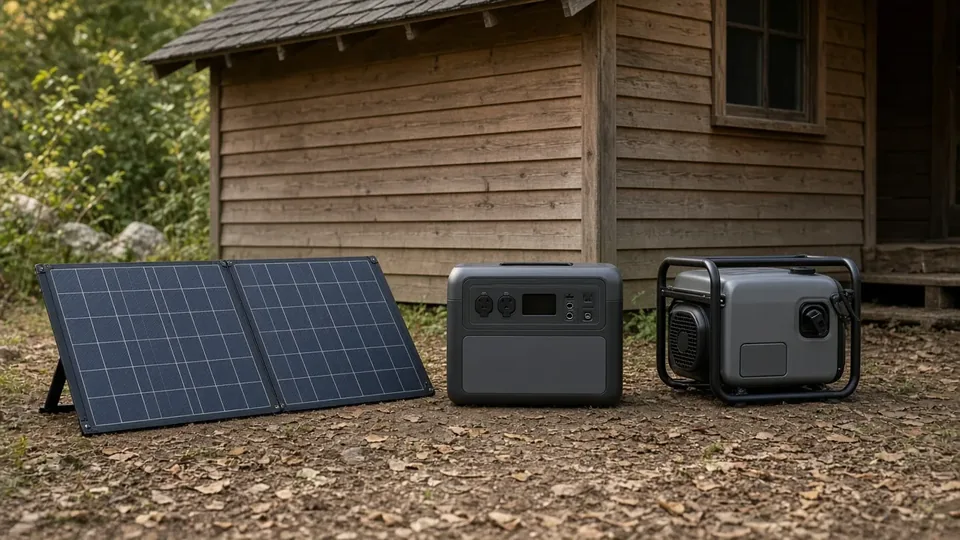
Daily Solar Harvest Versus Battery-Only Autonomy
When sizing a solar-only system for weekend use, the key is matching your daily energy needs with the solar harvest. Using the formula:
Solar Wh per day = Panel W x Peak Sun Hours x 0.75
For example, a 400 W solar array in an area with 4.5 peak sun hours (as verified in p06 /peak-sun-hours-us-solar-sizing) would generate:
400 W x 4.5 x 0.75 = 1,350 Wh per day
This is enough to cover a 1,100 Wh cabin load on a clear day, assuming no losses from inverter efficiency or battery storage. However, on cloudy days, the solar harvest drops significantly. A 400 W array might only generate 300-500 Wh on a cloudy day, depending on the cloud cover and panel type.
In contrast, a solar-plus-generator hybrid system uses a small generator to cover the shortfall during extended cloudy periods. This avoids the need for a large battery bank, which would be required to store enough energy for multiple days of low solar harvest.
Cloudy-Day Coverage Comparison
Solar-only systems are highly dependent on weather conditions. On a typical weekend with two cloudy days, a 1,350 Wh solar harvest might only provide 300-500 Wh per day, which is insufficient for a 1,100 Wh load. This means a solar-only system would need a larger battery bank to cover the deficit.
A hybrid system, on the other hand, can use the generator to cover the shortfall. For example, if the solar system only generates 300 Wh on a cloudy day, the generator can provide the remaining 800 Wh. This ensures continuous power without the need for a large battery bank.
Noise and Fuel Use of the Hybrid
One of the main drawbacks of a generator is noise. Most portable generators produce between 50-80 decibels, which is comparable to a loud conversation or a vacuum cleaner. This can be disruptive in a quiet cabin or campsite. However, newer inverter generators are significantly quieter, often producing less than 50 decibels, which is similar to a refrigerator.
Fuel use is another consideration. A small generator running for a few hours per day will use a minimal amount of fuel, but over the course of a weekend, this can add up. For example, a 1,000 W generator running for 2 hours per day would use about 0.2 gallons of fuel per day, assuming a fuel efficiency of 5 hours per gallon. Over a weekend, this would total 0.4 gallons.
Total System Weight and Cost
A solar-only system is typically lighter and more compact than a hybrid system. Solar panels and batteries are generally lightweight, and a 400 W solar array with a 2,000 Wh battery bank might weigh around 30-40 pounds. In contrast, a hybrid system includes a generator, which can add 50-100 pounds to the total weight.
In terms of cost, a solar-only system may be more expensive upfront. Compare current retailer prices for the panels, battery and generator you are considering; prices change often.
Runtime Reliability Side by Side
A solar-only system is reliable on clear days but may struggle during extended periods of low solar harvest. A 2,000 Wh battery bank with a 1,100 Wh daily load would provide about 1.8 days of autonomy on a clear day, assuming no solar input. However, on cloudy days, the battery would deplete faster, and the system would need to rely on the generator.
A hybrid system, on the other hand, provides more consistent runtime. The generator can be used to recharge the battery bank during cloudy days, ensuring continuous power. This makes a hybrid system more reliable in unpredictable weather conditions.
Best Weather Patterns for Each Approach
Solar-only systems are best suited for areas with high peak sun hours and minimal cloud cover. Regions like the Southwest United States, with peak sun hours of 5-6 per day, are ideal for solar-only systems. These areas experience long, sunny days that allow the solar array to generate sufficient energy for weekend use.
Hybrid systems are better suited for areas with variable weather patterns or frequent cloud cover. Regions like the Pacific Northwest or the Northeast, where peak sun hours are lower and cloud cover is more common, benefit from a hybrid system. The generator provides a backup during periods of low solar harvest, ensuring continuous power.
Worked Example
Example: Weekend Cabin in the Pacific Northwest
Daily Load: 1,100 Wh
Solar Array: 400 W
Peak Sun Hours: 3.5 (typical for the Pacific Northwest)
Battery Bank: 2,000 Wh
Generator: 1,000 W portable inverter generator
Solar Harvest Calculation:
Solar Wh per day = 400 W x 3.5 x 0.75 = 1,050 Wh
This is slightly less than the daily load of 1,100 Wh. On a clear day, the battery bank would need to provide the remaining 50 Wh. However, on cloudy days, the solar harvest drops to around 300-500 Wh, meaning the battery bank would need to provide the remaining 600-800 Wh.
Generator Use:
On a cloudy day, the generator can be used to recharge the battery bank. Assuming the generator runs for 1 hour per day, it can provide 1,000 Wh of energy, which is more than enough to cover the deficit.
This example shows how a hybrid system can provide reliable power in areas with variable weather patterns.
Decision Factors for USA Regions
When choosing between a solar-only and a hybrid system, consider the following factors based on your location:
- Peak Sun Hours: Areas with high peak sun hours are better suited for solar-only systems. Use p06 /peak-sun-hours-us-solar-sizing to find the peak sun hours for your region.
- Weather Patterns: Areas with frequent cloud cover or unpredictable weather benefit from a hybrid system.
- Noise Sensitivity: If you're sensitive to noise, a hybrid system with an inverter generator is a better choice.
- Fuel Availability: If you're in an area where fuel is not easily available, a solar-only system may be more practical.
- Budget: Solar-only systems may be more expensive upfront, while hybrid systems may have higher long-term fuel costs.
FAQ
How many cloudy days can solar-only handle?
A solar-only system can typically handle 1-2 cloudy days, depending on the battery capacity and solar harvest. For example, a 2,000 Wh battery bank with a 1,100 Wh daily load can provide about 1.8 days of autonomy on a clear day. However, on cloudy days, the battery may deplete faster, and the system may not be able to sustain power for multiple days.
Does the hybrid still need the 1.2 battery buffer?
Yes, the hybrid system still needs the 1.2 battery buffer to account for inefficiencies and unexpected load changes. The formula for battery Wh needed is:
Battery Wh needed = Daily Wh x Days x 1.2
For example, a 1,100 Wh daily load over 2 days would require:
1,100 x 2 x 1.2 = 2,640 Wh
This ensures the battery bank has enough capacity to handle fluctuations in energy use and inefficiencies.
Which costs less over a full season?
The cost of a solar-only system versus a hybrid system depends on several factors, including the cost of the generator, fuel prices, and the efficiency of the solar system. A solar-only system may be more expensive upfront but can be more cost-effective in the long run if the solar harvest is sufficient. A hybrid system may have lower upfront costs but can be more expensive over time due to fuel costs.
Related Pages
- p01 /how-to-size-off-grid-power-weekend
- p04 /battery-wh-needed-weekend
- p06 /peak-sun-hours-us-solar-sizing
- p08 /generator-surge-sizing-cabin-rv
- p21 /battery-autonomy-days-weekend
- p26 /cost-of-ownership-weekend-power
Sources to Cite
- SOURCE: National Renewable Energy Laboratory (NREL) - Peak Sun Hours Map
- SOURCE: U.S. Department of Energy - Solar Energy Basics
- SOURCE: Consumer Product Safety Commission (CPSC) - Generator Safety
Who This Is Not For
This page is not for users who require continuous power for more than a few days or who live in areas with no access to solar or generator fuel. It is also not for users who need to power high-wattage appliances like electric heaters or air conditioners, which are not typically supported by portable power systems. Finally, this page is not for users who are not comfortable with basic electrical safety practices or who are not familiar with the limitations of portable power systems.