Buying Guide: Choosing a Portable Power Station for Weekend Use
Updated 2026-10-21 · Published by Charland & Co. · Based on published specs; we have not tested the products discussed.
Quick answer: For a weekend trip with a 1,200 W load and 3 days of use, you'll need a power station with at least 4,320 Wh capacity (1,200 W x 3 days x 1.2). A 5,000 Wh station with 1,500 W continuous output and solar charging capability would work well.
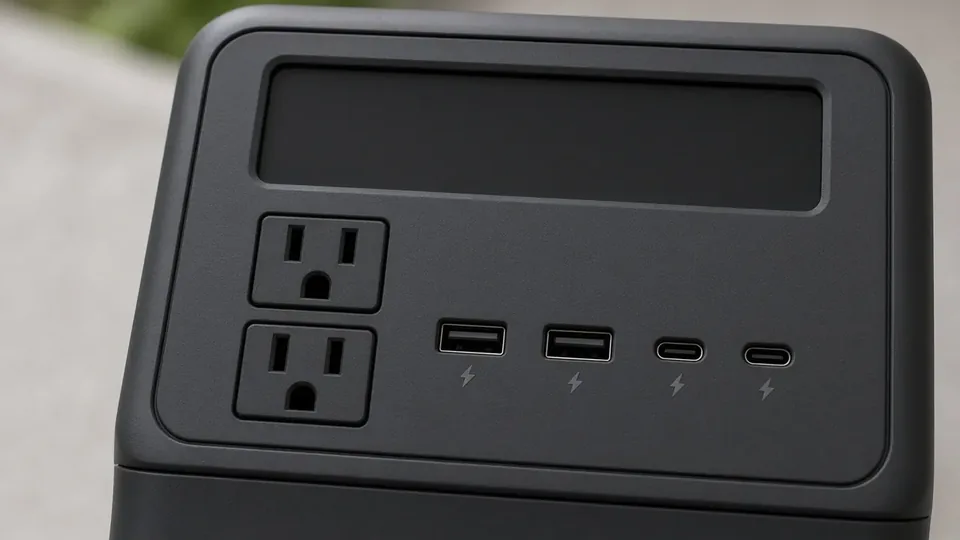
Choosing the right portable power station for weekend use can feel overwhelming. There are so many options, each with different capacities, outputs, and features. But with a few key considerations and the right formulas, you can find a station that fits your needs without overspending or underbuying.
This guide will walk you through the main factors to consider when choosing a portable power station for weekend use, including battery capacity, continuous and surge wattage, charging options, and efficiency. We'll also show you how to use the formulas from other pages to size your station accurately.
What to Look for in a Portable Power Station
1. Battery Capacity (Wh)
Battery capacity is measured in watt-hours (Wh), and it determines how long your power station will last on a single charge. The formula to calculate the battery capacity you need is:
Battery Wh needed = Daily Wh x Days x 1.2
The 1.2 factor accounts for inefficiencies in the system, such as energy loss during charging and discharging.
For example, if your weekend load is 1,000 W and you plan to use it for 2 days, the calculation would be:
Battery Wh needed = 1,000 W x 2 days x 1.2 = 2,400 Wh
So, you'll need a power station with at least 2,400 Wh of battery capacity.
2. Continuous and Surge Wattage
Continuous wattage is the amount of power your station can supply continuously without overheating or shutting down. Surge wattage is the short-term power boost it can provide when starting up high-wattage devices like refrigerators or air conditioners.
The formula to calculate surge wattage is:
Surge W = Total running W - Largest running W + Largest starting W
For example, if your total running load is 1,000 W, the largest running device is 300 W, and the largest starting device is 600 W, the surge wattage would be:
Surge W = 1,000 W - 300 W + 600 W = 1,300 W
So, your power station should have at least 1,300 W of surge wattage to handle the startup of the largest device.
3. Charging Options
Portable power stations can be charged via wall outlets, car chargers, or solar panels. The charging speed and compatibility with your setup are important considerations.
- Wall charging is the fastest and most common method. Look for a station that can be fully charged in 4-6 hours via a standard wall outlet.
- Car charging is useful if you're on the go and need to recharge while driving. Ensure the station has a compatible car charging port.
- Solar charging is ideal for off-grid use. Look for a station that supports solar input and has a high solar charging efficiency.
4. Efficiency and Losses
No power station is 100% efficient. Energy is lost during charging and discharging, and some stations are more efficient than others. The formulas from other pages can help you account for these losses.
For example, the formula for cold-weather usable Wh is:
Cold-weather usable Wh = Wh x 0.85
This accounts for the reduced battery performance in cold temperatures. If you're using your station in cold weather, you'll need to multiply the battery capacity by 0.85 to get the usable capacity.
5. Expandability and Scalability
Some power stations allow you to expand their capacity by adding extra battery packs. This is useful if your power needs grow over time.
If you're unsure about your future needs, consider a station with expandable battery packs.
Step-by-Step How-to List: Choosing the Right Power Station
- Build a Load List: Start by listing all the devices you plan to power during your weekend trip. Include their wattage and whether they require a surge at startup.
- Calculate Total Daily Load: Add up the wattage of all your devices to get your total daily load in watts.
- Estimate Days of Use: Determine how many days you'll need the power station to run.
- Calculate Battery Capacity Needed: Use the formula Battery Wh needed = Daily Wh x Days x 1.2 to find the minimum battery capacity you need.
- Calculate Surge Wattage: Use the formula Surge W = Total running W - Largest running W + Largest starting W to determine the surge wattage your station needs.
- Consider Charging Options: Choose a station that supports your preferred charging method (wall, car, or solar).
- Account for Efficiency Losses: If you'll be using the station in cold weather, multiply the battery capacity by 0.85 to get the usable capacity.
- Check for Expandability: If your power needs might grow, consider a station with expandable battery packs.
Worked Example: Choosing a Power Station for a Weekend Trip
Let's say you're planning a weekend trip and you've built a load list that totals 1,000 W. You plan to use the power station for 2 days and you want to account for inefficiencies.
Step 1: Calculate Battery Capacity Needed
Battery Wh needed = Daily Wh x Days x 1.2
Battery Wh needed = 1,000 W x 2 days x 1.2 = 2,400 Wh
So, you'll need a power station with at least 2,400 Wh of battery capacity.
Step 2: Calculate Surge Wattage
Assume your largest running device is 300 W and your largest starting device is 600 W.
Surge W = Total running W - Largest running W + Largest starting W
Surge W = 1,000 W - 300 W + 600 W = 1,300 W
So, your power station should have at least 1,300 W of surge wattage.
Step 3: Consider Charging Options
If you plan to use solar panels, look for a station that supports solar input and has a high solar charging efficiency.
Step 4: Account for Cold Weather
If you're using the station in cold weather, you'll need to multiply the battery capacity by 0.85 to get the usable capacity.
Cold-weather usable Wh = 2,400 Wh x 0.85 = 2,040 Wh
So, you'll need a power station with at least 2,400 Wh of battery capacity to account for cold-weather losses.
Step 5: Choose a Station with Expandable Capacity
If you're unsure about your future needs, consider a station with expandable battery packs.
Worked Example 2: A Different Scenario
Let's say you're planning a 3-day trip and your total load is 1,200 W. You want to account for inefficiencies and also use the station in cold weather.
Step 1: Calculate Battery Capacity Needed
Battery Wh needed = Daily Wh x Days x 1.2
Battery Wh needed = 1,200 W x 3 days x 1.2 = 4,320 Wh
So, you'll need a power station with at least 4,320 Wh of battery capacity.
Step 2: Calculate Surge Wattage
Assume your largest running device is 400 W and your largest starting device is 800 W.
Surge W = Total running W - Largest running W + Largest starting W
Surge W = 1,200 W - 400 W + 800 W = 1,600 W
So, your power station should have at least 1,600 W of surge wattage.
Step 3: Consider Charging Options
If you plan to use solar panels, look for a station that supports solar input and has a high solar charging efficiency.
Step 4: Account for Cold Weather
If you're using the station in cold weather, you'll need to multiply the battery capacity by 0.85 to get the usable capacity.
Cold-weather usable Wh = 4,320 Wh x 0.85 = 3,672 Wh
So, you'll need a power station with at least 4,320 Wh of battery capacity to account for cold-weather losses.
Step 5: Choose a Station with Expandable Capacity
If you're unsure about your future needs, consider a station with expandable battery packs.
Common Mistakes to Avoid
- Ignoring Surge Wattage: Many people overlook surge wattage and assume their power station can handle all devices. However, high-wattage devices like refrigerators and air conditioners require a surge at startup. Always calculate surge wattage to avoid underbuying.
- Not Accounting for Efficiency Losses: Efficiency losses during charging and discharging can significantly reduce the usable capacity of your power station. Always multiply your battery capacity by 0.85 to account for these losses.
- Choosing the Wrong Charging Method: If you're planning to use solar panels, make sure your power station supports solar input and has a high solar charging efficiency.
- Overlooking Expandability: If your power needs might grow over time, consider a station with expandable battery packs.
Who This Is Not For
This guide is not for people who need power for extended periods (more than a few days), or for those who require high continuous wattage (more than 3,000 W) for extended use. It's also not for those who need to power building wiring or use a power station as a permanent backup power source.
FAQ
What is the difference between continuous and surge wattage?
Continuous wattage is the amount of power a power station can supply continuously, while surge wattage is the short-term power boost it can provide when starting up high-wattage devices.
How do I calculate the battery capacity I need?
Use the formula: Battery Wh needed = Daily Wh x Days x 1.2. This accounts for inefficiencies in the system.
What is the best way to charge a portable power station?
The best way to charge a portable power station depends on your needs. Wall charging is the fastest, car charging is useful on the go, and solar charging is ideal for off-grid use.
How does cold weather affect battery capacity?
Cold weather reduces battery performance. To account for this, multiply the battery capacity by 0.85 to get the usable capacity.
Can I expand the battery capacity of a power station?
Yes, some power stations allow you to expand their capacity by adding extra battery packs. This is useful if your power needs grow over time.
Related Pages
Sources to Cite
- SOURCE: U.S. Department of Energy - Energy Efficiency and Renewable Energy
- SOURCE: National Renewable Energy Laboratory - Solar Resource Data
- SOURCE: Consumer Product Safety Commission - Generator Safety
- SOURCE: Centers for Disease Control and Prevention - Generator Safety